
In a Fifth Avenue bedroom, one of the most glamorous women in America was quietly preparing for her own funeral.
She was dying of lung cancer.
Her hair was disappearing from chemotherapy. Her body was weakening. But even now, everything had to be perfect.
One by one, she wrapped her jewelry in tissue paper.
Inside each parcel, she placed a small handwritten card bearing the name of the person who would receive it after she died.

She selected the wine for her funeral reception.
She organized the details.
She left instructions.
Because Barbara “Babe” Paley had spent her entire life making sure nothing appeared out of place.
For decades, magazines called her one of the most beautiful and stylish women in the world.
Truman Capote reportedly described her with an unforgettable line:
“Mrs. P had only one fault. She was perfect. Otherwise, she was perfect.”
But behind that perfection was a secret almost nobody understood.
The husband beside her had repeatedly humiliated her.
And the man she trusted enough to tell everything eventually transformed those private wounds into material for his writing.
By the time Babe Paley died, the woman who seemed to possess everything had discovered perhaps the cruelest truth imaginable:
Being admired by everyone is not the same thing as being loved by anyone.
SHE HAD BEEN TRAINED FOR THIS LIFE SINCE CHILDHOOD
Born Barbara Cushing in Boston, Babe grew up in a world where family name, marriage and social position mattered enormously.
Her father, Harvey Cushing, became one of America’s most celebrated surgeons.
Her mother, Catherine, had ambitions of a different kind.
Her daughters were expected to marry extraordinarily well.
And they did.
One married Vincent Astor.
Another married James Roosevelt and later John Hay Whitney.
Babe, the youngest, learned the rules early:
Beauty mattered.
Composure mattered.
And the man standing beside you could determine your place in the world.
Then, as a teenager, something happened that would permanently change her relationship with beauty.
A serious automobile accident damaged her face and knocked out teeth. Reconstructive treatment followed.
She emerged still beautiful—perhaps even more striking in photographs.
But the experience apparently taught her something profound.
Beauty wasn’t simply something you possessed.
It was something you maintained.
That philosophy would eventually consume almost every part of her life.
THEN SHE MET THE MAN WHO COULD GIVE HER EVERYTHING
After an unsuccessful first marriage, Babe met William S. Paley.
He wasn’t simply wealthy.
He was the enormously powerful force behind CBS.
Paley possessed money, influence, art and media power on a scale few Americans could imagine.
But Babe possessed something he wanted too.
Access.
Her family connections allowed her to move naturally through America’s old-money establishment.
Together, they looked unstoppable.
They married in 1947.
Babe left Vogue, where she had worked as a fashion editor, and began creating something else:
the perfect life.
Their homes became legendary.
Their parties became coveted invitations.
She worked with celebrated designers.
She remembered birthdays, flowers, seating arrangements and menus.
At their Long Island estate, she reportedly kept records of previous dinners so returning guests wouldn’t be served the same meal twice.
Nothing was accidental.
Not the flowers.
Not the clothes.
Not the guests.
Not Babe.
Women copied her.
When she tied a scarf around a handbag, others followed.
When she allowed her hair to turn gray, it became fashionable.
She could reportedly wear magnificent Cartier jewelry beside something inexpensive and somehow make the cheap object look intentional.
The world saw perfection.
What it didn’t see was her marriage.
THE PERFECT HUSBAND HAD A SECRET LIFE
William Paley was powerful, charismatic—and repeatedly associated with other women.
Babe knew.
But she rarely allowed the humiliation to become public.
That was the bargain.
She had spent her life learning how to occupy the most desirable seat in the room.
Now she had to learn how to remain there.
So she smiled.
Hosted dinners.
Selected flowers.
Appeared in photographs.
And suffered privately.
Then, in 1955, an unlikely man entered her life.
His name was Truman Capote.
And for the first time, Babe Paley found someone she believed she could tell the truth.
THE MAN WHO FINALLY MADE HER LAUGH
Capote was almost the opposite of the restrained world Babe inhabited.
He was witty, theatrical, observant and dangerously curious.
Their friendship became extraordinarily close.
He called.
He visited.
He traveled with the Paleys.
Most importantly, Babe talked to him.
Really talked.
She reportedly confided details about her loneliness and her husband’s infidelities—the things the woman photographed as the embodiment of perfection could never publicly admit.
For perhaps the first time, Babe had somewhere she could remove the armor.
Capote reportedly regarded her as one of the most important people in his life.
She trusted him more deeply than almost anyone.
There was only one problem.
Truman Capote was a writer.
And writers collect details.
Capote was working on what he believed would become his masterpiece.
Its title was Answered Prayers.
He wanted to expose the secret world of the rich and powerful.
And the women who had welcomed him into that world had given him extraordinary material.
They told him everything.
Affairs.
Marriages.
Scandals.
Humiliations.
Secrets.
They thought they were talking to their friend.
Capote was also listening as an author.
And eventually those two identities collided catastrophically.
THEN BABE OPENED A MAGAZINE
In 1975, Esquire published Capote’s “La Côte Basque, 1965.”
Officially, it was fiction.
Names were changed.
Characters could be described as fictionalized or composite.
But to the people inside Babe’s social world, some of the parallels were painfully recognizable.
Babe began reading.
Then she encountered details that reportedly felt terrifyingly familiar.
Private details.
Details concerning a powerful media executive and marital humiliation.
Details resembling things she believed she had shared with Capote in confidence.
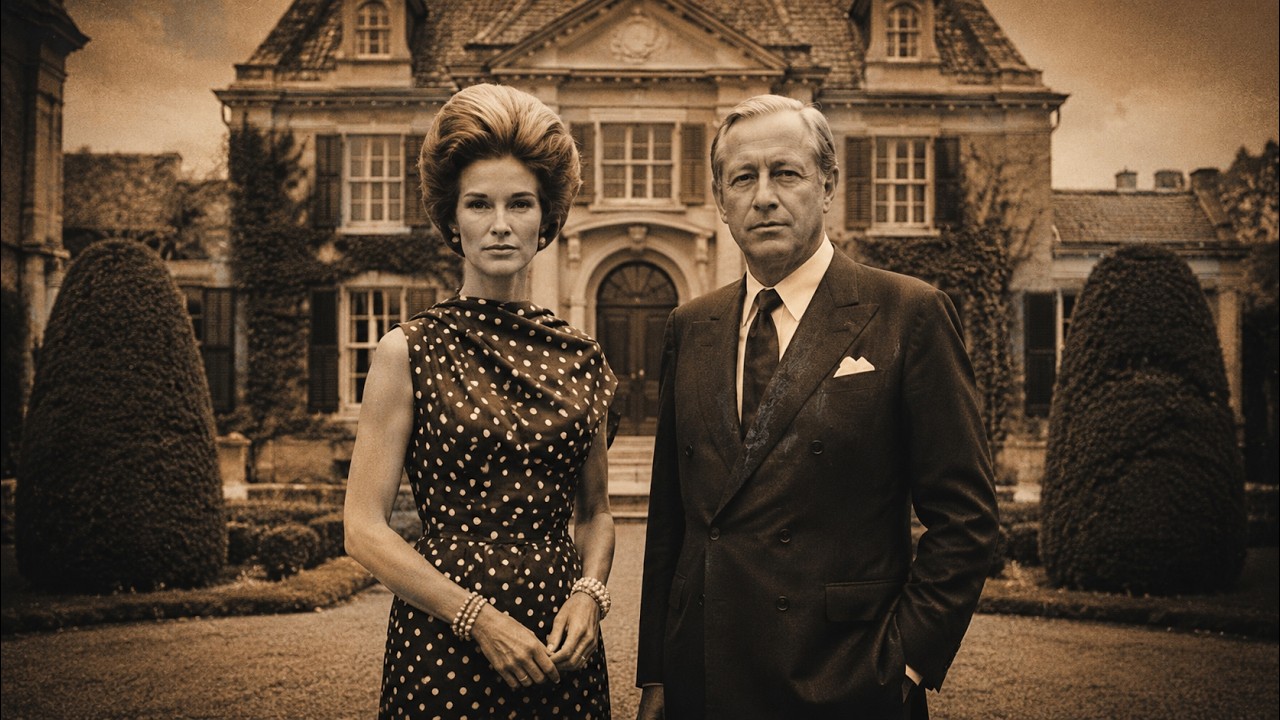
Imagine that moment.
You are undergoing cancer treatment.
Your hair is falling out.
Your marriage has already wounded you for decades.
Then the one person you trusted with those wounds appears to have turned that intimacy into literature for strangers to consume.
Babe reportedly read the piece.
And something inside her closed permanently.
She never spoke to Truman Capote again.
HE TRIED TO COME BACK
Capote attempted to explain himself after publication alienated several women in his social circle.
But what explanation could possibly repair it?
He was a writer.
Yes.
But Babe believed he was also her friend.
That distinction was everything.
For approximately two decades, she had given him access to the one thing almost nobody else possessed:
the private Babe Paley.
Not the fashion icon.
Not Mrs. William S. Paley.
Not the woman in Vogue.
Her.
And now she apparently felt that even this relationship had not been safe.
So Babe chose the only weapon she had left.
Silence.
No dramatic public revenge.
No screaming interview.
No memoir exposing Capote.
She simply removed herself from his life.
Completely.
For the remaining years of her life, she reportedly never spoke to him again.
And for a man who had once described their bond as extraordinarily important, her absence may have been the punishment no public scandal could equal.
BUT BABE WAS ALREADY DYING
In 1974, she had been diagnosed with lung cancer.
Chemotherapy took her hair.
Babe responded by wearing elegant turbans.
Even illness became incorporated into the image.
She continued appearing publicly when she could.
Still composed.
Still elegant.
Still Babe Paley.
But privately, time was running out.
And during her final months, something haunting happened.
She began preparing.
She wrapped jewelry for friends and relatives.
She wrote names on cards.
She organized her possessions.
She even planned details surrounding her funeral.
The woman who had spent decades arranging everyone else’s experience was now arranging their experience of her death.
There would be no chaos.
No ugly ending.
Not if Babe could control it.
ON JULY 6, 1978, PERFECTION FINALLY STOPPED
Babe Paley died of lung cancer one day after her 63rd birthday.
Her funeral was held near the Long Island world she had spent decades creating.
Friends gathered.
The arrangements had been made.
The wine had been selected.
The woman being buried had effectively helped prepare the event herself.
But one person was missing.
Truman Capote.
He was not invited.
After decades of intimacy, he had no place at her funeral.
Babe’s silence followed her all the way to the grave.
Capote never completed Answered Prayers in the grand form he had promised.
He died in 1984.
William Paley lived until 1990.
And eventually he was buried beside Babe.
There is something almost painfully ironic about that ending.
The man beside whom she had spent decades maintaining the image of a perfect marriage would ultimately remain beside her permanently.
But perhaps the saddest part of Babe Paley’s story isn’t her husband’s affairs.
It isn’t even Capote’s betrayal.
It’s the possibility that the world rewarded her most enthusiastically for the very thing that imprisoned her:
her perfection.
People studied her clothes but couldn’t see her loneliness.
They copied her scarves but didn’t know what happened inside her marriage.
They photographed her homes but couldn’t photograph what happened after the guests left.
They called her perfect because she had become extraordinarily skilled at preventing anyone from seeing the cost.
And when cancer finally began dismantling the physical image she had maintained for decades, she did what she had always done.
She made it beautiful.
A silk turban.
A perfectly arranged room.
Jewelry wrapped carefully in tissue.
Names written neatly on cards.
Even death would not be permitted to catch Babe Paley unprepared.
Truman Capote once said her only fault was that she was perfect.
Perhaps he was wrong.
Perhaps perfection wasn’t her fault at all.
Perhaps it was her armor.
Because beneath the clothes, the houses, the jewels, the parties and one of the most famous marriages in American high society was simply a woman who desperately needed one person she could trust.
She believed she had finally found him.
And then she opened a magazine.
That may be the darkest irony of Babe Paley’s extraordinary life.
Millions of people wanted to look like her.
Almost nobody knew what it cost to be her.
